
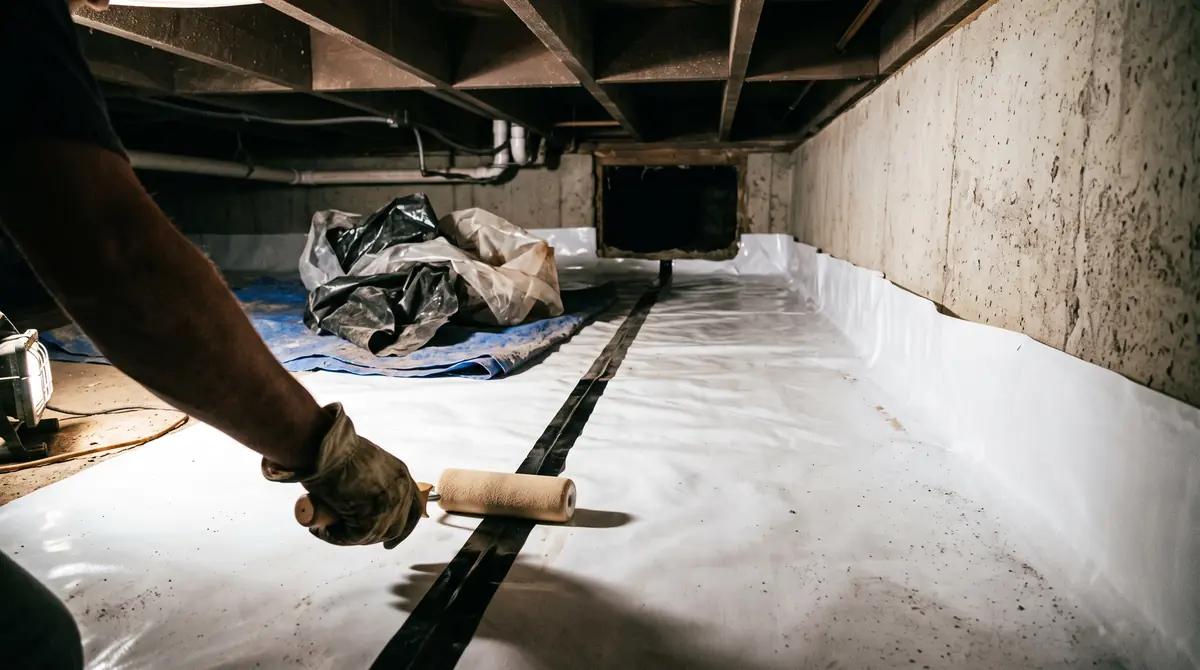
Crawl Space Encapsulation Around Fletcher
Fletcher's big subdivisions went up between roughly 1980 and 2000, so the plastic under your home may still be the builder's, worn thin by damp ground. Sometimes new plastic will do; dirt that never dries out needs crawl space encapsulation.
Why does the dirt stay wet under a house on flat ground?
Flat ground gives rain nowhere to run, so it soaks in beside the foundation and wets the dirt underneath. That moisture rises off the dirt into the crawl space air. On a low lot near Cane Creek, the ground rarely dries out between storms. Over time that damp air pulls the insulation down from the joists, and the rooms above start to smell musty.
Should the yard or the crawl space get fixed first?
Fix the outside water first if rain runs toward your home, then deal with the crawl space. A sealed crawl space lasts longer once the gutters, downspouts and grade carry water away from the foundation. If the yard drains fine and the dirt is only damp, we go straight to the crawl space and keep it dry.
Subdivision houses still on the builder's first plastic
Fletcher grew fast from roughly 1980 through 2000, as developers built multiple large subdivisions. If your home went up then, the plastic on the dirt may still be the builder's. So may the insulation batts under the floor. Decades of damp air off wet ground wear both of them out.
The plastic tears, slides off the walls or bunches up until bare dirt shows. The batts soak up moisture, get heavy and sag, and some end up lying on the dirt. Upstairs, you'll notice a musty smell that's worst in summer, or floors that stay cold all winter.
Damp dirt may only need a new vapor barrier, while dirt that never dries out calls for sealing the whole crawl space. Once we've been under your home, we'll tell you which one it needs.
Level ground that holds the rain
Rain here tends to sit where it lands. Most of Fletcher is flat, with hills only in places, and Cane Creek, the French Broad River and their tributaries run all through it.
On a flat lot near one of those creeks, rain has no slope to run down. It soaks in along your foundation wall and keeps the dirt under your home wet for days.
Big storms make it worse. During Helene, the French Broad River in Fletcher crested ten feet higher than its previous peak. When the creeks and the river run that high, rain on flat ground has nowhere to go, so it pools in the yard, pushes on the block foundation and finds the low corner of your crawl space.
If that happens after every heavy rain, water removal and waterproofing come first. We don't seal anything down over wet dirt.
Where the water comes from decides who pays
If stormwater on your property threatens your home, the Town of Fletcher offers grants that can help pay for the drainage outside. That's the grading, ditches and pipes that turn water away before it ever gets to the crawl space.
After the next heavy rain, step outside and watch the water heading for your home. Is it running off the road or out of a ditch, or off your own yard?
Road and ditch water is the kind of stormwater problem the grants are set up for, so it's worth asking the Town about. Water off your own roof or yard usually means gutters and grading that are yours to fix. The answer also tells us where to start in the crawl space.
Frequently asked questions
Is it worth sealing a crawl space that's damp but never floods?
Usually, yes. Damp does its damage slowly, and wet dirt on a level lot keeps the air under your floor humid all summer. That air sags the batts, sweats on the ductwork and leaves a musty smell upstairs. Sealing costs more than new plastic alone, so we check how wet the dirt, the air and the framing are first. Then we'll tell you if the smaller fix will hold.
Do I need a sump pump under my home?
Only if water actually collects down there. Damp dirt doesn't need one. Puddles that stand in the low corner after a heavy rain do, because that water has to have a way out before we seal anything over it. We see both kinds on the soggy lots along Cane Creek, and we only put a pump where water stands.
How do I know my old ground cover needs replacing?
It's worn out once it stops covering the dirt. That means plastic that's torn, bunched up or pulled away from the walls, bare dirt showing through, or water sitting on top of it. Plenty of houses still have the plastic that went down when they were built. If yours is that old and the batts above it sag or smell musty, damp has been getting through for a while.
Tell us what the last big rain did
Let us know where the water came from and where it sat. Mention anything you've noticed in your home since, like a musty smell, a wet corner or batts hanging down. Craggy Crawlspace gives you the quote for free.
Flat lot or hillside, call us or fill in the request form, and we'll ring you back about your home.